
Bod Kyi Sowa Rigpa བོད་ཀྱི་གསོ་བ་རིག་པ།༔
The Ancient Healing Science of Tibetan Medicine


The Gyud Zhi རྒྱུད་བཞི།༔
Tibetan Medicine’s
Classical Texts
The classical texts of Tibetan Medicine are known as the “Four Tantras”, or Gyud Zhi (རྒྱུད་བཞི།). These root texts form the basis of Tibetan Medicine theory, including the traditional views on anatomy, physiology, diagnosis, pathology, and the treatment of disease.
The Gyud Zhi text is a brilliant synthesis of medical knowledge spanning many centuries and numerous cultural influences. The text integrates indigenous Tibetan medical practice, as well as elements of Indian Ayurveda, Chinese Medicine, Persian, and Hellenistic medicine.
The Gyud Zhi in its complete form dates back to at least the 12th century, and is directly based on much older texts and medical traditions. It is associated with famous Tibetan master physicians such as Yuthog Yongtan Gonpo, as well as the great “Dharma Kings” of ancient Tibet, such as Trisong Detsen, in the late 8th century, who brought Buddhism to the Tibetan region and organized a great empire for the Tibetan people.
Since ancient times, students of Tibetan Medicine study the Gyud Zhi, memorizing long passages of text, debating, and applying the study in formal medical university education. Famous Tibetan Medicine schools exist in Tibet, India, China, and other regions, such as the Mentsi Khang universities, first in Lhasa, Tibet, and then in Dharamsala, India.
Each generation of Tibetan physicians applies the teachings of the Gyud Zhi, and composes commentaries based on their contemporary clinical practice and modern research. In this way, Tibetan Medicine remains rooted in its ancient traditional base, yet grows and adapts to meet the needs of modern people.
The Foundation Theory of Tibetan Medicine
The practice of Tibetan Medicine is based on the system of the Five Elements (འབྱུང་བ་ལྔ), including Earth, Water, Fire, Air, and Space. These five combine within the dimension of the human being to form the three “Nyepa” (ཉེས་པ་གསུ), or three Elemental Humors. These three elemental Nyepa comprise dynamic interactions of the Five Elements, expressing within the anatomical structures and physiological functions of each person.
We work with this elemental Nyepa theory on every level of medical practice, from diagnosis, to pathology, treatment and self-care. The Three Nyepa form each person’s body-type, personality, strengths, weaknesses, health, and longevity.

Diagnostic Methods
The Tibetan Medicine Practitioner, or “Menpa” (སྨན་པ།), assesses each patient according to their unique constitutional expression of the Three Nyepa. We pay attention to every detail of the clinical interaction. The patients’ physical appearance, their face, voice, smell, movements, words, mood, and many other factors all reveal insights into their condition.
The primary diagnostic methods of the Menpa include visual observation, dialog, and analysis of the tongue, pulse, and urine.
Using these tools, we gain valuable information to help us determine your individual condition according to the Five Elements. We assess your current state, long-term health history, and future prognosis.

Methods of Treatment
The primary methods of treatment in Tibetan Medicine include diet, lifestyle, herbal medicines, and external therapies. We use therapeutic tools such as moxibustion, Kunye massage therapy, hot stones, and cupping. We sometimes also employ therapeutic breath work, joyful movement exercises, and guided meditation.
Each treatment is customized based on the patient's individual condition. Some key factors in developing a treatment protocol include the patients elemental constitution, their past medical history, current health challenges and goals, the season, and regional climate. In Tibetan Medicine, treatments are never “one size fits all”, but rather a unique approach to address the needs of each person’s holistic health.

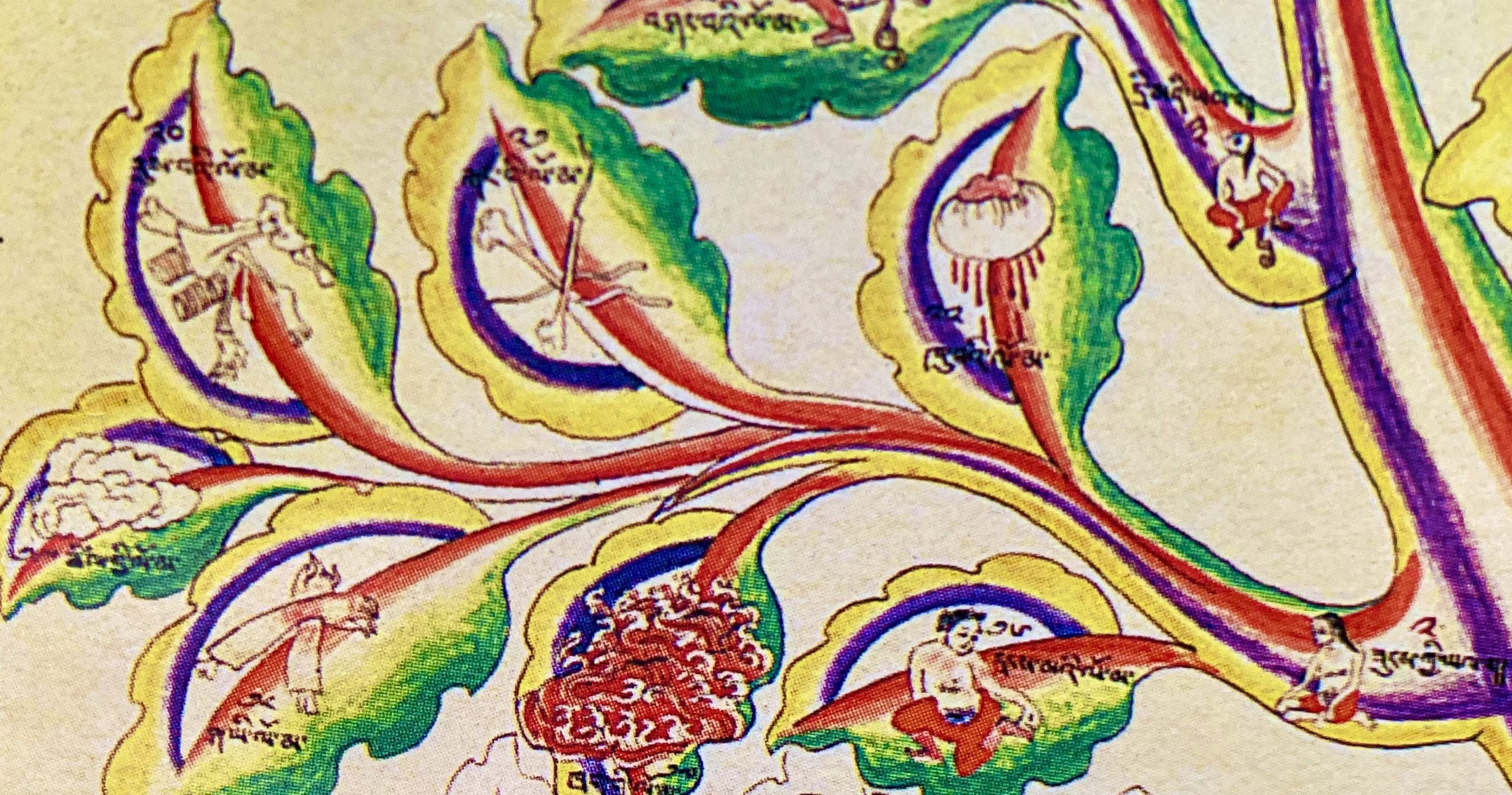
The Flowers and Fruits of Health
Tibetan Medicine teaches that maintaining our optimal health can result in many wonderful benefits for our lifetime. These fantastic attributes of a healthy life are known as the “Flowers and Fruits of Health”.
The Two Flowers of Health include Freedom From Disease (ནད་མེད་པ།), and Long Life (ཚེ་རིང་བ།).
The Three Fruits of Health include Spiritual Knowledge (ཆོས།), Wealth (ནོར།), and Happiness (བདེ་བ།).
LEARN MORE (Watch)
LEARN MORE (Read)