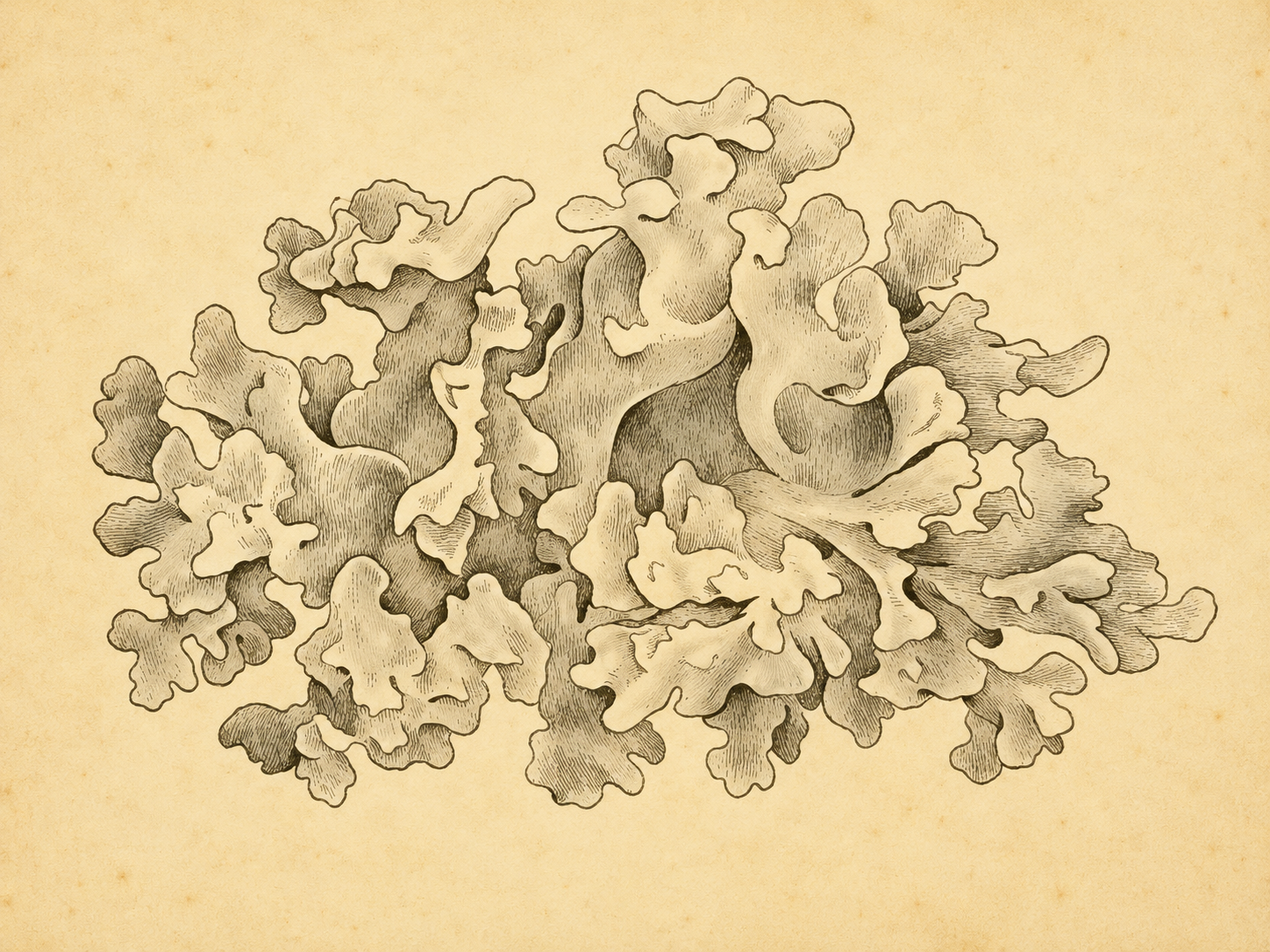
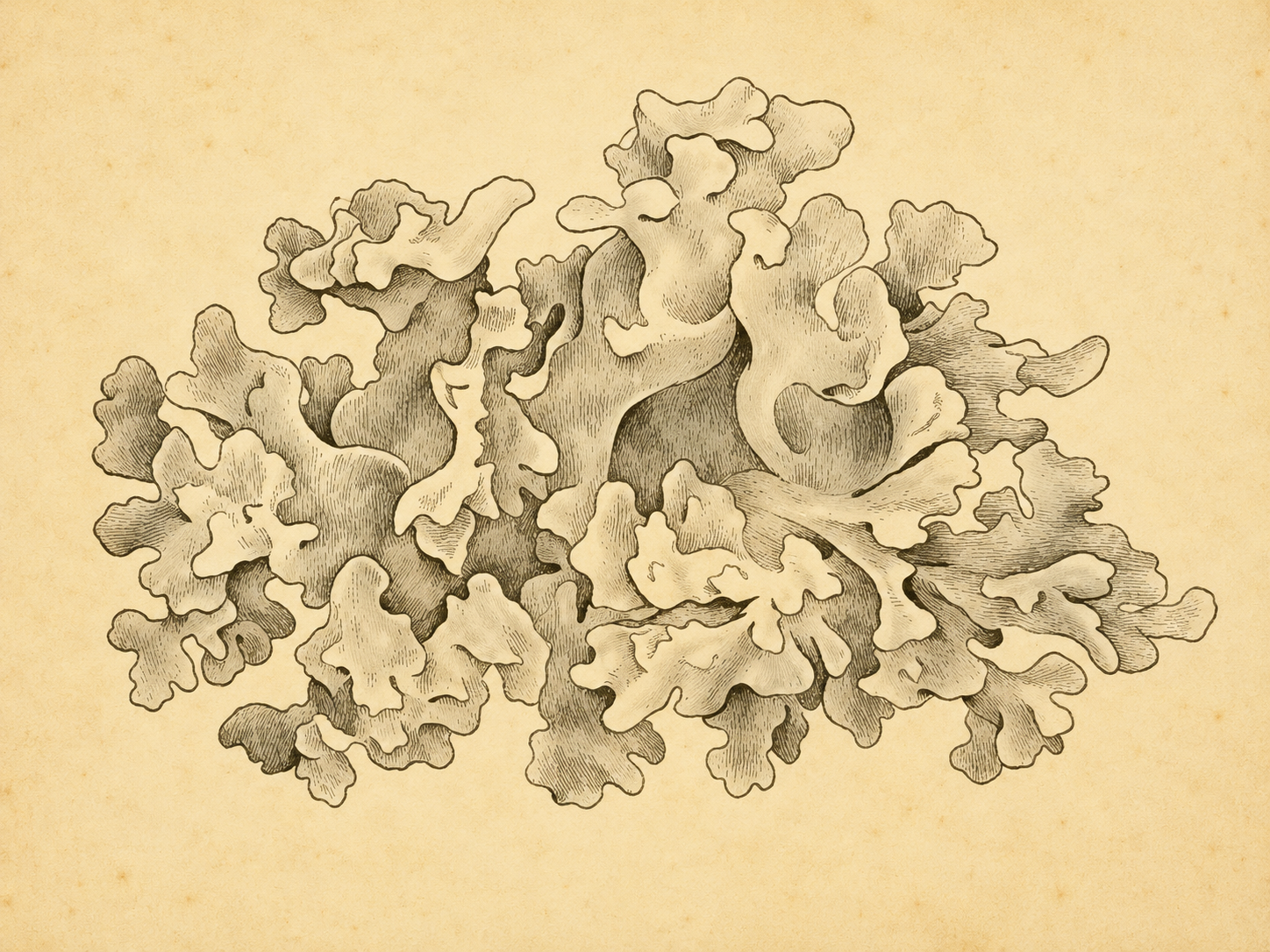
Tremella fuciformis (snow fungus), historical botanical illustration, 1897. From G. Lindau, “Tremellineae,” in Engler & Prantl, Die Natürlichen Pflanzenfamilien, Fig. 60H.
Tremella (Snow Fungus): How to Use This Chinese Medicinal Food in Your Home Kitchen
Tremella (aka snow fungus, white fungus, silver ear, Yin Er, or Bai Mu Er) is an edible medicinal mushroom used in Chinese cooking and food therapy. Dried tremella looks like a pretty, pale, yellowish flower. It has many benefits and is simple to use.
In Chinese medicine, Tremella is considered sweet, bland and neutral. It is traditionally used to nourish yin, moisten the Lung, support Stomach yin and generate fluids. It is especially associated with the treatment of dryness: dry throat or mouth, thirst, dry cough, dry skin, or the kind of depleted dryness that can follow illness, prolonged strain or other circumstances that consume the body's fluids.
Yin is not simply the opposite of yang or another word for “cooling.” It includes the substantial, nourishing and moistening aspects of the body: jin ye (the body fluids that moisten the skin and tissues, lubricate the joints, and fill the spaces between tissues), along with the moistening and nourishing aspects of Blood and essence. These substances keep tissues supple, moisten the mouth, throat, skin and respiratory tract, and provide some of the material basis from which the body restores itself.
Dryness can come from the environment, from temporary fluid loss, or from a deeper tendency not to produce or maintain enough nourishing fluids.
Sometimes simply drinking more water is not always the fix. Chinese medicine asks whether the body has enough substance available to nourish and moisten and whether it has the capacity to make it.
Tremella is useful because it offers the kind of nourishment to support these constituents in the form of an ordinary food. It has a rather neutral flavor and can be added to all kinds of food. The medicine is gentle, not especially heavy or rich, and has traditionally been used particularly for the Lung and Stomach.
Tremella, autumn and the solar qi nodes
Tremella can be useful throughout the year, especially for people who constitutionally tend toward dryness or insufficient fluids. But late summer and autumn are an especially natural time to use more of it.
Chinese seasonal medicine follows the 24 solar terms, or qi nodes—the jieqi, which describe the gradual changes in light, temperature, moisture and seasonal activity through the year (something we explore throughout the year in our Yangsheng classes).
As summer gives way to autumn, heat, activity and sweating may already have consumed fluids. Even in the relatively moderate climate of the San Francisco Bay Area, the longer, more yang days of summer encourage greater activity and expenditure. Then the seasonal environment begins shifting toward autumn and patterns of depletion and dryness tend to result.
As we write this in September, we have recently completed Chushu (End of Heat) and are moving from Bailu (White Dew) toward Qiufen (Autumn Equinox), a time when dryness becomes increasingly apparent. The lips, skin, throat, voice, and respiratory tract are often the first places we notice it.
This is why we tend to increase Tremella in autumn, but it is not exclusively an autumn food. Someone with a constitutional tendency toward dryness may benefit from it throughout the year.
Tremella at a Glance
Taste: sweet, bland
Temperature: neutral
Channels: Lung, Stomach; Kidney is also included in some materia medica traditions
Part used: dried fruiting body
Traditional actions: nourishes yin, moistens the Lung, nourishes the Stomach and generates fluids
Especially useful for: dryness, dry mouth or throat, thirst, dry cough, dry skin and depletion accompanied by insufficient fluids
Tremella and the skin
Tremella has a longstanding reputation in Chinese food therapy and elsewhere in East Asia as a beauty food associated with a clear, moist, glowing complexion. From a Chinese medical perspective, the connection is straightforward. The Lung has a close relationship with the skin. Modern research has also become interested in Tremella polysaccharides for potential effects on hydration, antioxidant activity and skin-barrier function, and Tremella extracts now appear in many skincare products.
Most of that research, however, involves extracts or isolated polysaccharides rather than proving that eating Tremella produces a specific cosmetic result. Its traditional reputation as a beauty food is interesting, but we still think of it primarily as what it has long been: a moistening, nourishing food.
Tremella and low white blood cell counts
Another use of Tremella that has influenced our clinical practice is one we first learned during our years as acupuncture apprentices with Robert Levine in Berkeley, Ca.
Tremella contains polysaccharides that have been studied for effects on immune function. In China, concentrated Tremella polysaccharide preparations have been used for leukopenia, or low white blood cell counts, including leukopenia associated with chemotherapy and radiation treatment.
That research concerns concentrated preparations, not ordinary cooked Tremella, so the two should not be treated as equivalent.
In our Chinese medicine practice, we have nevertheless sometimes recommended regular dietary Tremella to patients who are already under the care of an oncology team and are experiencing treatment-related depletion, dryness and low white blood cell counts. We have seen cases in which patients eating Tremella regularly subsequently showed improved counts on their laboratory reports.
That is a clinical observation, not evidence that the food caused the improvement. We use Tremella here as a nourishing food alongside appropriate medical care, not as a treatment for cancer or a substitute for medical management of leukopenia or neutropenia, and always check that the recommendation matches the patient's Chinese medical diagnostic pattern.
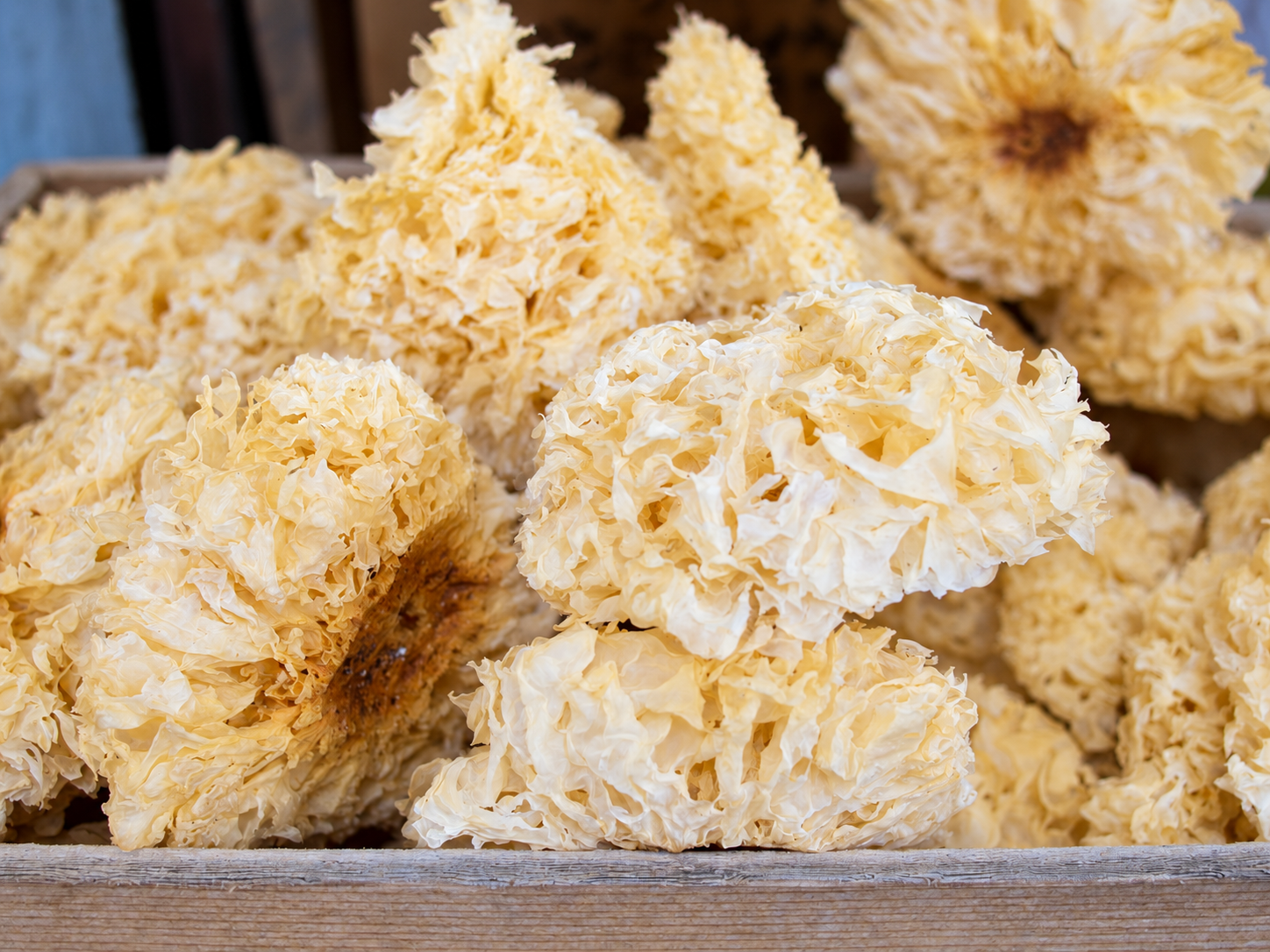
Photo: Rhododendrites / Wikimedia Commons, CC BY-SA 4.0
Using Tremella in Your Kitchen
Tremella is extremely simple to use. Rinse the dried mushroom, soak it in water for about 20–30 minutes until fully expanded, cut away the firm yellowish base, and tear the soft white portion into pieces.
Then cook it.
Add it to soup, broth, congee or a stew, or use it in the gently sweet soups for which Tremella is particularly well known in Chinese home cooking. Pear, jujube, lotus seed, lily bulb and goji berry are all common partners.
Simmer until the texture suits you. Around 30–45 minutes leaves some springiness; longer cooking makes the mushroom softer and the broth increasingly silky and slightly gelatinous. Some of Tremella's polysaccharides are water-soluble and contribute to that silky broth, so if you don't love the texture of the mushroom itself, you can enjoy the cooking liquid and leave some of the pieces behind.
How much?
Tremella expands enormously when soaked, so start small. For a pot serving 2–4 people, roughly half to one small dried cluster is usually plenty. If yours comes in pieces, use a modest handful.
The basic rule is simply: small amount dry, large amount once soaked.
Can you eat Tremella regularly?
Yes, for many people. Someone who tends toward dryness, insufficient fluids or yin depletion may use Tremella regularly throughout the year and simply increase it during dry weather, periods of depletion or autumn.
Like any food, it does not suit every pattern equally well. If someone tends strongly toward cold, weak digestion, persistent loose stools or abundant dampness and phlegm, large frequent servings may be less appropriate.
Chinese food therapy is not really about deciding that a food is universally “good for you.” It is about asking whether the qualities of the food match what the person needs at that time.

Anne & Adam, acupuncturists at Ritual Health
About the Authors
Dr. Anne Shelton Crute and Dr. Adam Okerblom are licensed acupuncturists and Doctors of Acupuncture and Oriental Medicine, and co-owners of Ritual Health Acupuncture & Herbalism in Berkeley, Albany, and El Cerrito. Their work is rooted in classical Chinese medicine, acupuncture, Chinese herbal medicine, and the study of the classical medical and philosophical traditions.
Adam also practices and teaches Tibetan Medicine (Sowa Rigpa) and translates Tibetan medical texts. Together, Anne and Adam teach future acupuncturists in graduate and doctoral programs throughout California, offer continuing education for licensed practitioners nationally, and teach online classes for practitioners and patients.
To learn more about classical Chinese medicine, Tibetan Medicine, acupuncture, herbal medicine, classes, Chinese Polestar astrology, or to schedule an appointment, look around at the rest of our website here at Ritual Health or book now.